Emotive language relies on the feelings and emotions associated with words rather than just their literal meanings to influence and persuade.
Examples: I am firm, you are obstinate, he is pig-headed.
A fluent and forcible speech delivered by members of our own party is eloquent. The same speech by a member of the opposite party is bombastic.
Questions:
What is the connotation of "an incurable romantic" or "a love sick swine" or "lovelorn"?
“An incurable romantic” connotes a person who is very in roman antic, whereas “a love sick swine” connotes a person who is unable to think or behave sensibly because he or she is deeply in love with someone, especially someone who does not love him or her. “Lovelorn” connotes sympathy towards a person who falls in love with someone that do not love him or her.
What is the connotation of being "madly in love" and " head over heels in love"?
“Madly in love” connotes the satire of a person who is deeply in love. “Head over heels in love” connotes someone falls passionately in love and is intoxicated by the feeling.
What is the connotation of "stop bugging me" and " do not disturb"?
“Stop bugging me” connotes frustration in dealing with someone who is irritating. “Do not disturb” connotes a firm warning to people not to make noise.
(I'm trying to finish my assignment at the 11th hour.) Older brother to irritating sister
“Stop bugging me!”
(Can I borrow your car mom to take my girlfriend on a trip?) Mother's turning down plea of teenage son who has just gotten his learner's driving licence
“I think you are madly in love.”
Posted outside the cage of a sleeping tiger
“Do not disturb.”
A sign on the door of the oral interview room
“Do not disturb.”
Posted on the door of a hotel room
“Do not disturb.”
(I'm in the middle of an important meeting with a client.) Husband on the handphone
“I am busy right now.”
Saturday, August 28, 2010

Structured Writing Focus
Write a 5 paragraph essay describing the best time or the worst time (past, present, or future) to be alive and why.
From a young age, I have shown a deep interest in world history. I have read histories of different parts of the world, ranging from the Mesopotamian civilization to the Cold War era. Besides, I have also depicted a significant concern about how the world is changing in terms of its environment and the technology achieved by the human civilization. Even though I always wish to enjoy the simple life experienced by people in the past who were free from the stress faced by people today due to work and high standard of living, the past is the worst time to live in. This is because the past is an age where technology is absent and the world was dominated by decade-long chaos as well as illogical or inhumane beliefs that deny scientific truths and knowledge.
In the past, the pace of technological advancement was far slower compared to that in the present. This is partly due to the fact that the knowledge available to mankind was scarce, as well as the lack of experiences and inspirations that impede them from creating new technologies. Since technology is meant to reduce the burden of work and make life easier, life without it would be a very difficult and inefficient one. For instance, before the Wright brothers invented airplane, a major breakthrough in the technology of transportation, travelling across the world, either by land or by water, can be very costly and time-consuming. Moreover, the chores carried out by people in the past, especially factory workers, were far more laborious and dangerous compared to their present counterparts. Taking ore-mining as an example, the miners had to risk their lives when extracting ores in the mines, before being replaced by large machines which can perform the same role at a more efficient manner without risking a single human life.
In addition, there were no international organizations or laws in the past which promote world peace in order to protect the people and their fundamental rights from bloody conflicts. Nations in the past were free to expand their empires via conquest and colonization. Hence, wars and battles were common phenomena across the globe, as the warring factions were fuelled by the strong desire to control the world at any length to show their superiority over other races or religions in the guise of patriotism. Unlike the present generation, generations in the past were ignorant towards the importance of maintaining world peace. Instead, they dedicate their lives in defending their own community and eradicate people whom they perceive as hostiles, although it can mean massacres. As a result, billions of innocent people, especially women and children, died in these bloodsheds or ended up as involuntary slaves who were forced to work for their colonizers.
The past is also an age of feudalism where the societies are ruled by the royals that claimed to have supernatural origins, apart from religious groups who delude the people into believing myths or irrational beliefs. Since these groups are often the authorities and are granted with huge powers through the feudal system which was commonly practiced in the past, people who oppose their views towards any matter will be subjected to punishment and treated as a heresy. Hence, the people in the past were not only deprived of their freedom of expression, but were also forced to live in falsehoods. Scientists in the past, such as Nicolaus Copernicus and Galileo Galilei, often found themselves facing heavy challenges and pressures from religious groups while trying to uncover the truth about the universe. This is because most of their findings or discoveries contradict with the views of the religions towards the universe.
In short, the past is the worst time to live in, as it is an age of darkness, where technology is limited and people are overly adhered to superstitions and have no regards towards creating a harmonious society that transcends cultural differences. All these attributes are caused by a common reason, the lack of education and appreciation towards knowledge. It can be seen that the unrest caused by wars and the influence of religious myths in the society started to cease gradually and the human civilization started to flourish since the beginning of Renaissance, when people began to acquire information and knowledge that were previously ignored. Despite being the worst period to be alive, the past serves as an important lesson for mankind so that the mistakes in the past will not be repeated, enabling the present and future generations to improve themselves, thus ensuring a brighter future for mankind.
From a young age, I have shown a deep interest in world history. I have read histories of different parts of the world, ranging from the Mesopotamian civilization to the Cold War era. Besides, I have also depicted a significant concern about how the world is changing in terms of its environment and the technology achieved by the human civilization. Even though I always wish to enjoy the simple life experienced by people in the past who were free from the stress faced by people today due to work and high standard of living, the past is the worst time to live in. This is because the past is an age where technology is absent and the world was dominated by decade-long chaos as well as illogical or inhumane beliefs that deny scientific truths and knowledge.
In the past, the pace of technological advancement was far slower compared to that in the present. This is partly due to the fact that the knowledge available to mankind was scarce, as well as the lack of experiences and inspirations that impede them from creating new technologies. Since technology is meant to reduce the burden of work and make life easier, life without it would be a very difficult and inefficient one. For instance, before the Wright brothers invented airplane, a major breakthrough in the technology of transportation, travelling across the world, either by land or by water, can be very costly and time-consuming. Moreover, the chores carried out by people in the past, especially factory workers, were far more laborious and dangerous compared to their present counterparts. Taking ore-mining as an example, the miners had to risk their lives when extracting ores in the mines, before being replaced by large machines which can perform the same role at a more efficient manner without risking a single human life.
In addition, there were no international organizations or laws in the past which promote world peace in order to protect the people and their fundamental rights from bloody conflicts. Nations in the past were free to expand their empires via conquest and colonization. Hence, wars and battles were common phenomena across the globe, as the warring factions were fuelled by the strong desire to control the world at any length to show their superiority over other races or religions in the guise of patriotism. Unlike the present generation, generations in the past were ignorant towards the importance of maintaining world peace. Instead, they dedicate their lives in defending their own community and eradicate people whom they perceive as hostiles, although it can mean massacres. As a result, billions of innocent people, especially women and children, died in these bloodsheds or ended up as involuntary slaves who were forced to work for their colonizers.
The past is also an age of feudalism where the societies are ruled by the royals that claimed to have supernatural origins, apart from religious groups who delude the people into believing myths or irrational beliefs. Since these groups are often the authorities and are granted with huge powers through the feudal system which was commonly practiced in the past, people who oppose their views towards any matter will be subjected to punishment and treated as a heresy. Hence, the people in the past were not only deprived of their freedom of expression, but were also forced to live in falsehoods. Scientists in the past, such as Nicolaus Copernicus and Galileo Galilei, often found themselves facing heavy challenges and pressures from religious groups while trying to uncover the truth about the universe. This is because most of their findings or discoveries contradict with the views of the religions towards the universe.
In short, the past is the worst time to live in, as it is an age of darkness, where technology is limited and people are overly adhered to superstitions and have no regards towards creating a harmonious society that transcends cultural differences. All these attributes are caused by a common reason, the lack of education and appreciation towards knowledge. It can be seen that the unrest caused by wars and the influence of religious myths in the society started to cease gradually and the human civilization started to flourish since the beginning of Renaissance, when people began to acquire information and knowledge that were previously ignored. Despite being the worst period to be alive, the past serves as an important lesson for mankind so that the mistakes in the past will not be repeated, enabling the present and future generations to improve themselves, thus ensuring a brighter future for mankind.
Friday, August 27, 2010
Loony Teens
Comic 1

Comic 2


1. How does the teenager feel about exam tension?
He immediately loses his confidence once the exam starts, apart from forgetting everything he had studied for the exam, regardless of how how well-prepared he is.
2. In what way is there a communication gap between the teenager and his parents?
The teenager and his parents have different perceptions towards the same matter. To the father, education is very important for the teenager and thus he is concerned about his son's performance in studies. The teenager, on the other hand, views education as a routine and feels that there is nothing significant about studies, as it has been a part of his normal daily life.
3. What point is the teenager trying to get across to his father in this cartoon?
The message the teenager is trying to get across to his father is that his father still do not understand him well enough, as well as the fact that the thinking of the younger generation, such as the teenager's, differs from his generation's. Thus, the father should not put his son into the same intellectual mold as his.
4. In what way does the father understand his son well?
The son always find his father's thoughts clashes with his.
Spoof Advertisements

 The advertisements above were put up to promote movie-viewing by a group of cinemas.
1. What is the underlying message of the advertisements to encourage more people to go to the cinema to watch movies?
These advertisements are trying to convey the message that reality is always unpleasant and not enjoyable. Thus, movie is the best place to seek for pleasure, entertainment and happiness, for the fictional dimensions set in movies are often built based on the wild imaginations or creativities which people find joy in or wish indulge themselves into as a mean to temporarily avoid themselves from troubles or hassles they face in reality.
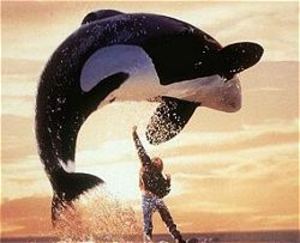
2. How is the idea of fantasy as seen in the romantic movie "Titanic" and the idealized version of whales in the movie " Free Willy" contrasted with the slogan "reality sucks" of the print advertisements?
The romance between the two main characters in "Titanic" is overly fantasized. In reality, a love that transcends social status rarely exists and usually does not last long, as this relationship will often face greater tests and hardships that arise due to the difference in social class. Besides, it is almost impossible to have a "happily ever after" life, even though the relationship ends with a happy marriage. This is because new challenges and problems will arise when a establishing a new family.
The animal-human relationship depicted in "Free Willy" is also fictionalized. In real life, the level of mutual-understanding between humans and animals remains far from reaching the level shown in the movie, as the communication gap between humans and animals is still too wide to be overcomed. It is not possible to have an animal, regardless of how highly trained and tamed it is, to have a thinking which is the same as humans.
3. What is the stereotypical image of wild animals in captivity and love cruises?
Wild animals in captivity are often stereotyped as being innocent, sad and having a strong desire to return to their original habitats. The stereotypical image of love cruises is an environment filled with romance and love, as well as free from troubles, pains and sadness.

Thursday, April 1, 2010
Should Sex Education be Implemented in Malaysia?
In my view, the implementation of sex education in Malaysia is necessary. This is because many teenagers nowadays have misconceptions towards sex. Since there are no proper channels to provide teenagers the truths about sex, they often obtain the knowledge of sex from the media such as porn movies and magazines. These media have always deluded them into thinking that having sex is purely a tool for pleasure and entertainment, without considering the aftermath of it. Hence, this would result in an increase in pre-marital sex among teenagers in Malaysia, apart from a rise in teenage pregnancy, for they do not know the dangers and risks of having a sexual relationship before marriage. Therefore, the implementation of sex education in Malaysis is a tall order to ensure that teenagers receive true infomation about sex, rather than being misled by the media.
Sunday, January 24, 2010
Working Retired
There are only a few magic numbers in American civic life. You can vote (and get drafted) at age 18.You can drink at 21.You can become president at 35. You can retire at 65.But on that last one-do Americans really want to? Now that so many Americans are living healthfully until 85, fewer and fewer actually retire at 65. Today there are 5 million people 65 or older in the U.S. labor force, almost twice what there were in the early 1980s.And that number is about to explode.
Some people are working past 65 because they have to: Health care costs are rising, and Social Security payments-at an average of about $1,000 a month-don't cover what they used to. But the bigger trend in Senior Work is the fact that Americans love- and now that we're living longer, we want to work longer too. We just can't get enough. My friend and mentor Harold Burson, the co-founder of the global PR firm Burson Marsteller, where I am CEO, just turned 86, and comes to work every day, bursting with ideas.
On average, Americans work over 1,800 hours per year, substantially more than most workers around the world. Although we get fewer vacation days per year than other Western countries (13 days, compared to 28 in the UK, and 37 in France), we let more than twice as many go unused. And really, what’s a vacation to us these days without our Blackberry? In 2006, almost a quarter of us (23%) checked our work e-mail and voice mail while away-up from just 16% in 2005. A lot of us love to work.
In fact, the impulse to work is so basic that the Fourth Commandment is to take off one day a week. Not working for a day is right up there with not murdering, not committing adultery, and not stealing. We tend to assume that most people want off-waiting all week for the Friday afternoon whistle so they can stream out of work. To be sure, many jobs are terrible- even life-threatening- and people reasonably can't wait to get home. But as work overall has become more managerial, consulting, and software-oriented-and as manufacturing jobs have been on the decline-a lot of people have changed their attitude toward work, and the number of workaholics has skyrocketed. How many times have you heard the old saying that no one ever lay on his deathbed wishing he had spent more time at the office? And yet, a lot of people are doing just that. The sandwich generation is going to be in for a shock when they call their 70-year old parents at the office and find they are just too busy to babysit their grandkids.
Add to America's general obsession with work the fact that it is now the baby boomer generation who is nearing 65, and it becomes clear that the traditional idea of "retirement"-with its gold watch, rocking chair, and golf course- is just about ready for retirement itself.Boomers reinvented youth in the 1960s and economic success in the 1980s; they are not to do their senior years by someone else's formula. According to a 2005 survey by Merrill Lynch, more than 3 in 4 boomers say they have no intention of seeking a traditional retirement. Rather they look ahead to their 20 more years (when Social Security was created in 1935,a 65 year old could expect just 13 more years) and they say Bring It On. Some want to keep their health insurance, or have enough funds for the extra years- but more of the boomers surveyed said they wanted to keep working in order to stay mentally and physically active and to stay connected to people.
"Microtrends- the small forces behind tomorrow's big changes" Mark J. Penn (2007)
Hachette Book Group
Questions:
1. What do the magic numbers of 18, 21, 35 and 65 represent in American civic life?
18 is the age where one can vote or be drafted. One can drink at the age of 21, whereas the number 35 represents the age where a person can become the president. 65 is the age where one can retire.
2. Why do some people work past 65?
This is due to the fact that health care costs are rising, and Social Security payments-at an average of about $1,000 a month-don't cover what they used to. Above all, Americans love and want to work longer as they are living longer.
3. What does the phrase " bursting with ideas” when he comes to work at the age of 86 implies about Mr. Harold Burson?
Mr. Harold Burson is still working very hard and his mind is still in an active state despite his old age. To him, age is not the factor in determining when he should stop working.
4. Give examples to show that American employees are workaholics by choice?
Although the Americans get fewer vacation days per year than other Western countries (13 days, compared to 28 in the UK, and 37 in France), they let more than twice as many go unused. In 2006, almost a quarter of the Americans (23%) checked their work e-mail and voice mail while away-up from just 16% in 2005.
5. What is the tone of the writer when he mentions that "not working for a day is right up there with not murdering, not committing adultery and not stealing"?
Sarcarstic.
6. What example is given to show that the grandparents of the present generation do not fit with the traditional stereotypical image of grandparents in the past?
The sandwich generation’s 70-year old parents working at the office are just too busy to babysit their grandkids.
7. Explain in your own words the sentence “it becomes clear that the traditional idea of "retirement"-with its gold watch, rocking chair, and golf course-is just about ready for retirement itself."
The stereotypical idea of retirement is no longer applied to the workforce today and is on the brink of extinction as the workers prefer working for a longer time to seeking retirement.
Some people are working past 65 because they have to: Health care costs are rising, and Social Security payments-at an average of about $1,000 a month-don't cover what they used to. But the bigger trend in Senior Work is the fact that Americans love- and now that we're living longer, we want to work longer too. We just can't get enough. My friend and mentor Harold Burson, the co-founder of the global PR firm Burson Marsteller, where I am CEO, just turned 86, and comes to work every day, bursting with ideas.
On average, Americans work over 1,800 hours per year, substantially more than most workers around the world. Although we get fewer vacation days per year than other Western countries (13 days, compared to 28 in the UK, and 37 in France), we let more than twice as many go unused. And really, what’s a vacation to us these days without our Blackberry? In 2006, almost a quarter of us (23%) checked our work e-mail and voice mail while away-up from just 16% in 2005. A lot of us love to work.
In fact, the impulse to work is so basic that the Fourth Commandment is to take off one day a week. Not working for a day is right up there with not murdering, not committing adultery, and not stealing. We tend to assume that most people want off-waiting all week for the Friday afternoon whistle so they can stream out of work. To be sure, many jobs are terrible- even life-threatening- and people reasonably can't wait to get home. But as work overall has become more managerial, consulting, and software-oriented-and as manufacturing jobs have been on the decline-a lot of people have changed their attitude toward work, and the number of workaholics has skyrocketed. How many times have you heard the old saying that no one ever lay on his deathbed wishing he had spent more time at the office? And yet, a lot of people are doing just that. The sandwich generation is going to be in for a shock when they call their 70-year old parents at the office and find they are just too busy to babysit their grandkids.
Add to America's general obsession with work the fact that it is now the baby boomer generation who is nearing 65, and it becomes clear that the traditional idea of "retirement"-with its gold watch, rocking chair, and golf course- is just about ready for retirement itself.Boomers reinvented youth in the 1960s and economic success in the 1980s; they are not to do their senior years by someone else's formula. According to a 2005 survey by Merrill Lynch, more than 3 in 4 boomers say they have no intention of seeking a traditional retirement. Rather they look ahead to their 20 more years (when Social Security was created in 1935,a 65 year old could expect just 13 more years) and they say Bring It On. Some want to keep their health insurance, or have enough funds for the extra years- but more of the boomers surveyed said they wanted to keep working in order to stay mentally and physically active and to stay connected to people.
"Microtrends- the small forces behind tomorrow's big changes" Mark J. Penn (2007)
Hachette Book Group
Questions:
1. What do the magic numbers of 18, 21, 35 and 65 represent in American civic life?
18 is the age where one can vote or be drafted. One can drink at the age of 21, whereas the number 35 represents the age where a person can become the president. 65 is the age where one can retire.
2. Why do some people work past 65?
This is due to the fact that health care costs are rising, and Social Security payments-at an average of about $1,000 a month-don't cover what they used to. Above all, Americans love and want to work longer as they are living longer.
3. What does the phrase " bursting with ideas” when he comes to work at the age of 86 implies about Mr. Harold Burson?
Mr. Harold Burson is still working very hard and his mind is still in an active state despite his old age. To him, age is not the factor in determining when he should stop working.
4. Give examples to show that American employees are workaholics by choice?
Although the Americans get fewer vacation days per year than other Western countries (13 days, compared to 28 in the UK, and 37 in France), they let more than twice as many go unused. In 2006, almost a quarter of the Americans (23%) checked their work e-mail and voice mail while away-up from just 16% in 2005.
5. What is the tone of the writer when he mentions that "not working for a day is right up there with not murdering, not committing adultery and not stealing"?
Sarcarstic.
6. What example is given to show that the grandparents of the present generation do not fit with the traditional stereotypical image of grandparents in the past?
The sandwich generation’s 70-year old parents working at the office are just too busy to babysit their grandkids.
7. Explain in your own words the sentence “it becomes clear that the traditional idea of "retirement"-with its gold watch, rocking chair, and golf course-is just about ready for retirement itself."
The stereotypical idea of retirement is no longer applied to the workforce today and is on the brink of extinction as the workers prefer working for a longer time to seeking retirement.
Saturday, January 23, 2010
Create your own slogan/ tag line for the advertisement
 "Grandma, I am not a little baby anymore! Do you think that ugly costume can scare me away?"
Subscribe to:
Posts (Atom)